Easing Transitions for Homeschooled Teens


Summary: 8 Ways to encourage your teens during times of stress or transitions, related to the pandemic or dealing with a higher homework load, or going from #homeschoolinghighschool to #college, etc. #homeschoolhighschool


This year, 2021, has given us all many things to continue to deal with. Some of our kids and teens have had to go about homeschooling without a lot of their usual co-op classes or activities.

Our graduates who have gone onto college are mostly now studying online from their bedrooms, instead of moving onto campus, or commuting there.

I remember a few years ago when my own daughter was starting college and commuting from our home. She had a lot to adjust to, including all the loads of homework for her college classes. 

She was adjusting to this big change pretty well, but did find it to be stressful transition as well.  

Other times, teens are dealing with a higher load of homeschool studies, such as during their junior year.

This got me thinking about how we can support our teens as they go through changes in their lives and take on new experiences.  And how can we do that, encouraging them, without making them feel like kid?

When our kids were little, it could be easier in a way, as we can give our support more directly.  

Then we helped our kids adjust to new things, such as the new babysitter, a new legos class, making friends, losing a friend who moves away, or moving to a new church, etc.  

It's so important, as we help our teens, that we not give them the message that they can't do it themselves.  

So today, I'd like to share 8 ideas for encouraging our homeschooled teens when they are going through a transition, to college, or a new job, or any new situations or transitions that our teens find themselves in.

Such as dealing with the pandemic, political situations in our  country, a family move to a new house, etc.

Some of these ideas have helped with my own transitions as a mom, too. 

The first one's my favorite.

1. Build in time with Nature


As a homeschooling mom, I was always looking for ways to build in nature, on the way to the store, buying supplies, etc.  

Now, with my commuting to college kid, we don't have as much time for long nature road trips together anymore.

But we still love taking time to notice things together, the sun on the leaves, all the fall colors, the clouds, the moon and stars from our deck.......  

So we have been enjoying shorter nature road trips together...still so special and beautiful to do.  

With the pandemic, I have been focusing on making time for myself to get out, even if it is to just walk around the block.  And stretch my legs.

I have added below, some of the pictures that I took on these short trips, or walks to local parks, etc.

2. Set out a Few Old Favorites

A favorite book, a special card, can really make a difference.


3. Leaving out a Treat

A simple idea that I have used a lot the summer before she started college, was just to put a favorite candy bar or snack in a basket, in their room..

4.  Being There when they Inclined to Share

Avoiding the "How was your day?" was key for us.  But when my teen would naturally begin sharing, I tried to be right there, putting my stuff aside. 

I also found that taking drives often was a great way to encourage my daughter to share if she wanted to, as we were focused on the drive and what we saw as we talked.


5.  Making use of Old Routines

Routines seem to help kids and teens a lot.  Well, they sure help me as well!

My teen had a major change in routine, going from homeschooling to college.  My routine had changed, too, of course, so I am trying to build in little things from my old routine for myself as well.  

Such as cooking dinner with my daughter, one night a week, like we always used to do.  

With our homeschooled teens going to college or work and being gone a lot during the day, can be such a big change for us mamas, too.  

So anything from our former routine may help.  It's is such a natural signal of safety and calmness.  

Stopping by our favorite pizza place, making an old favorite for dinner, and even having dinner at the same time as we used to, has helped all of us in my family.  

My teen even said that she missed her old chore routine. Can you believe that?


6.  Comparing New experiences to Old

My teen found out that many of her old friends were not going to the same college. 

That meant going into a new environment, and the stress of not knowing anyone.  Of course, most of the other college freshmen were in the same boat.  

It seemed to help to remind her of times when she had dealt with this same situation in the past.  

I mentioned her Youth and Government activity that she started in 9th grade.  When she began in that group, she also didn't know anyone.  But soon she was running for secretary!  

Similarities can really help.  I look for those for myself, too.


7.  Encouraging Fun!

Fun activities can help to build us up.  I look for fun activities for my family and for myself, too.  

Reminding my daughter to not forget the fun has been a part of my role as with her as she becomes a young adult.  And when I do that, it often reminds me to look for the fun, too.

Right now I am enjoying taking my camera out when I go walking.  And as a retired homeschool mama, I also am looking for a way to volunteer as a tutor for little ones.  I miss those times with my own when she was a young one. 

I also am encouraging my daughter to build in the fun at college and check out the clubs there, faith communities, etc.  

My teen still benefits from reminders to build in the fun as a teen, who can forget her personal needs, as we all can do from time to time.

8.  Encouraging Rest

Teens may tend to think that they have no limits.  Have you seen that in your house?  Can you relate?  

New college students can really be set up for illness and infections, with all the stress of starting out as a freshman.  

So building in  rest, quiet time, and prayer are things I often suggest or gently remind her of when she is tired.  

I also enjoy doing some quiet time activities as a family, watching movies, or reading together, important for our homeschooled kids, who have done so much as a family.  


Nurturing our teen's spirits is so important as they venture forth, and for our own spirits as moms, too.

With our teens face changes that often can mean some changes for us, too. Adjusting ourselves to the new, allows us space to begin to explore new exciting things for ourselves as well.  
  
More high school posts are on Pinterest:

My mission is to encourage and equip moms who come after me, so that they can enjoy the benefits of homeschooling high school, as my family did.  

That's why I wrote this book:


Homeschooling High School with College in Mind - 2nd edition

Kindle is FREE to read on Amazon Prime now. 
Take a look at it here - Amazon 


Thanks for stopping by BJ's Homeschool,


Betsy


Betsy is mom to her now college grad, whom she homeschooled from day one.  She blogs at BJ's Homeschool, about the early yearshigh school & college and wrote the book - Homeschooling High School with College in Mind.   She offers homeschool help through messages at BJ's Consulting


Want to stay in touch?  


This post was shared on my favorite linkups here.


Copyright @ BJ's Homeschool 2021
All Rights Reserved


Small Muscle Games for Handwriting


Summary:  Fun small muscle games for handwriting, build fine motor skills for handwriting, fine motor control, strengthening the hand, fine motor activities for homeschoolers. Fun games for handwriting.  Tips for homeschooling handwriting.


Are your little ones struggling with writing their letters? Or do they have trouble holding their pencil comfortably or grasp it very tightly? 

Or maybe you have a child who hates working in his handwriting book.....  

How about taking a break and doing some fun small muscle games instead?

Today, I'd like to share specific activities that are fun to do, and can help your kids to:

1.  Develop hand strength
2.  Finger Coordination
3.  Learn about the mature grasp pattern

Often handwriting struggles come from either a lack of hand strength or poor fine finger coordination.  

These things can be improved by using fun, playful games.... And that can give your child a break from their handwriting routine, too!

Let's start with fun ways to develop hand strength...


1.  HAND STRENGTH


A fun way to strengthen the finger muscles.

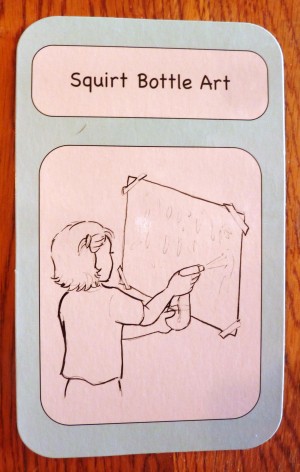
Squirt Bottle Art Activity

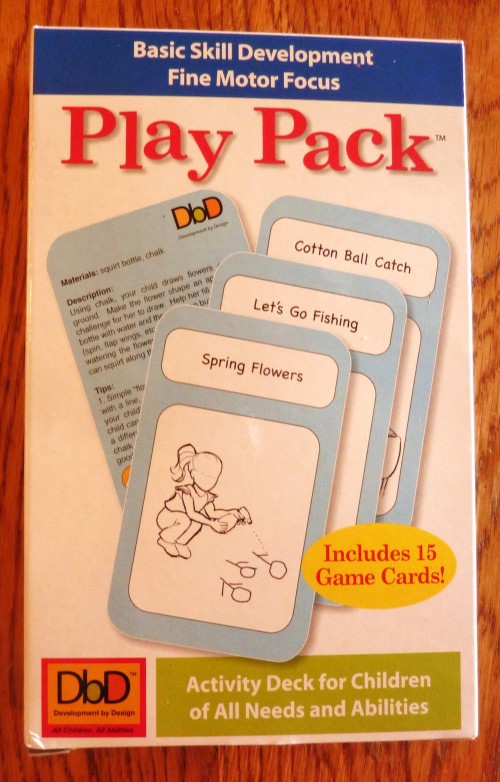
Squirt Bottle Art builds wrist and finger strength.  This is one of the small muscle activity cards from Play Pack - Fine Motor Focus.

In Squirt Bottle Art, the child squirts colored water onto a sheet a paper that is taped to the fridge high up. 

That places the wrist in the right position for strength building.  

Next, I have an activity that good for strengthening the whole hand and the fingers, too.  It's called Pizza Party.

Do it with playdough, or do it with biscuit dough, and make a snack of it!
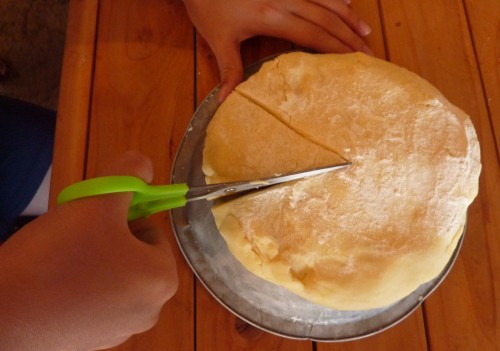
The Pizza Party Activity

Pizza Party is another great activity from the Play Pack cards.

First, your child makes a pizza from play dough, or biscuit dough, then cuts the pizza into slices with scissors.

It's FUN and strengthening at the same time! 

Adding toppings to the pizza, etc can provide even more helpful practice.  Have your child use the tips of his fingers to mold little tiny balls of clay/dough.

Make tiny balls of clay for pizza toppings! For more activities, go to www.thecurriculumchoice.com and  

Next, let's look at finger coordination...


2.  FINGER COORDINATION

Play Pack - Fine Motor Review

Activities such as cutting, drawing, finger painting, lego building, playing jacks, and playdough are all great activities to develop the finger muscles.  

The Cotton Ball Catch is a super on for coordination development.  

For more finger muscle activities, click here.

And finally, let's look at activities that can help develop a mature grasp of the pencil...


3.  DEVELOPING A MATURE GRASP


Developing a mature grasp pattern takes time.  In fact, little ones naturally start with a whole hand grasp, using the whole hand to grab their crayon or pencil.

Kids often start with this “palmar grip” pattern, which means holding the crayon in the palm of the hand, with the fingers wrapped around it.  

What does a mature grasp look like?  It can vary a lot, but here is a photo of what is often looks like:


P1260624


Some kids naturally move to a mature grasp pattern, over the years, as they grow, but some don't. 

Here's a fun game, to help encourage this more mature grasp:

P1260621
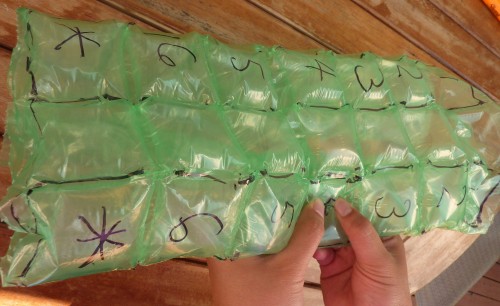
Bubble Wrap Maze


For the Bubble Wrap Maze activity: 

Just get a piece of bubble wrap and let your kids pop the bubbles.

Popping the bubbles with the thumb, index and ring fingers, pressing together, like in the picture above can really help.

Make it a game and pinch along a path on the bubble wrap! Click here for two more helpful activities for small muscle development.  

I have another post on grasp here, with lots more activities to try. 

If your child is really struggling, consider taking a break from their handwriting program, and let them play with these activities instead!  Here's some more ideas for that....Just put these titles in the search bar on my blog for:

Teach Your Kids to Write - Frugal Resources
Develop Hand Strength with Clay Fun - Strengthening with Clay Fun and great for teens, too.

If your child really struggles with handing his or hers pencil, click here to aids for that:
Aids, Devices for Grasp - Grasping Aids and Devices

"This is a great idea as when a child is struggling with writing they will not want to write, but they may want to play a “game!” Great post, BJ’s Homeschool." 


Thanks for stopping by BJ's Homeschool,


Betsy


Betsy is mom to her now college grad, whom she homeschooled from preK through high school.  She blogs at BJ's Homeschool, about the early yearshigh school & college and wrote - Homeschooling High School with College in Mind.   She offers free homeschool help through messages at BJ's Consulting


Want to stay in touch?

This post was shared on my favorite linkups here.

Copyright, 2018

 All Rights Reserved


Homeschooling Preschool/K - Early Science Activities and Frugal Resources


Summary:  Simple and easy-to-do early homeschool science activities, focusing on basic early learning and fun. And there is nothing like simple nature study and hands-on science activities to teach the love of science to your little ones. I am a former preschool teacher and veteran homeschooler.


Our early homeschooling years were all about exploring new things, playing with manipulatives, lots of read alouds and and lots of play outside.  

But, by far, my daughter's favorite thing during that time, was to do very simple science experiments in the kitchen, and go on nature walks to collect things.

And that became our focus for our early science studies...You know, science does not have to be complicated to be a wonderful learning experience for our kids.

Let's talk about:
  • nature study
  • birdwatching
  • baking, then....
  • simple resources for early science

Homeschooling High School - Making Your Teen a Frugal Study Space


Summary:  How to make a homeschool high school teen space, using what is easily on hand at home.  Plus organizational methods for storing study supplies.  #homeschoolhighschool  #homeschoolrooms #organizationalmethodshomeschool


Are you looking for some new ideas for making a study space for yourself, or your homeschooled teen? Today, I am sharing how we fixed up a small space for my high schooler.

Early Math FUN! - Homeschooling Preschool/K Math - Making a Manipulatives Kit and More


Summary:  How to make a frugal math manipulatives kit and teach your kids early math concepts. #homeschoolpreschool #homeschoolkindergarten #early math


When you little, everything is math!  

Toys can be counted, towels sorted and put into sets.  Cookie making became a lesson in adding and subtracting, and beads got sorted into patterns as well, as making necklaces.... 

Also, buttons, shells, rocks, sorted by shape, color, size, what have you.  Even laundry could be sorted into sets.  All of this is good early math learning!

Our little ones learn best through play.  Basic math concepts, such as counting, sorting, bigger/smaller, same/different, adding, subtracting, etc can all be learned through play with manipulatives. 


  Making a Manipulatives Kit


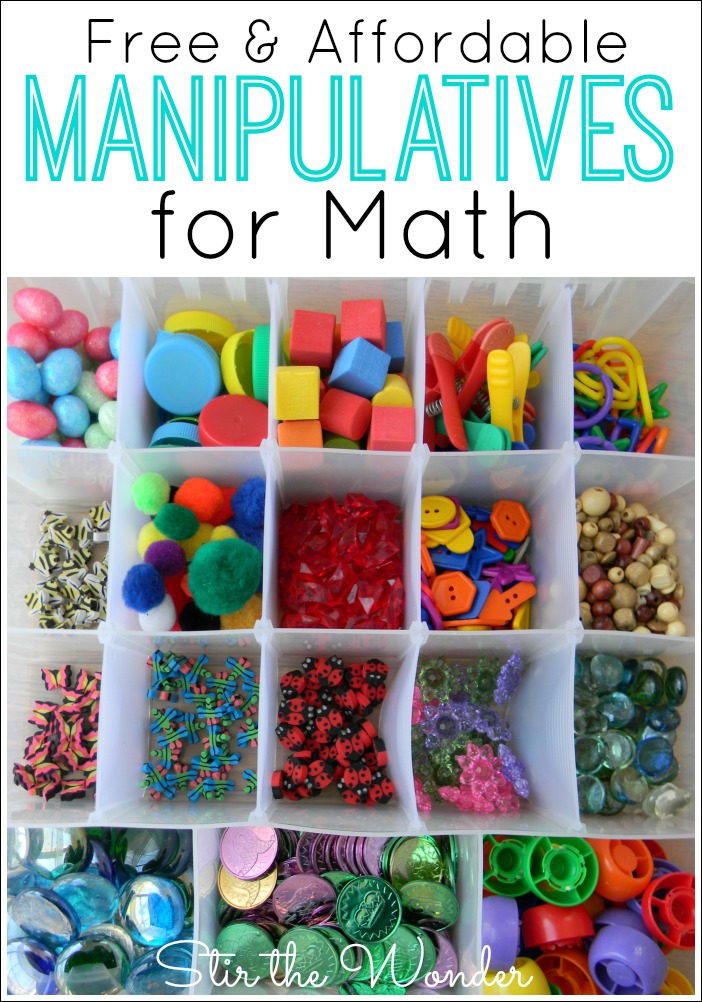
Making a kit can be frugal and simple.  We just collected small items from around the house, or from our beach collections of rocks, etc. 

Manipulatives can really be any small object that you have around your house.  

Buttons, shells, rocks, etc, can be sorted by shape, color, or size, and grouped into sets. This teaches early math concepts, as they are play!  

Even laundry could be sorted into sets, or by size, small, medium and large, such as with towels. 

We put our collected manipulatives into a shoe box, decorated it for fun, and got it out only for math play time. 

That made these little toys and objects special to her.

Some of the things that we included were:

1.  Rocks collected from the beach
2. Legos, or other small toys, to sort into sets, by color, size, or shape.
3.  Our collection of old buttons
4.  Pine cones

Stir the Wonder has a great post on Free and Affordable Math Manipulatives, full of more ideas for your kit.

Free & Affordable Math Manipulatives for Kids to use with hands-on learning activities!


Early Math Concepts


Get out your small toys and manipulatives and let your child explore with them.  While they are playing they can learn these math concepts:

1. Number Concepts: 

Using small objects. Ask your child: How many is four? How many is six? 

What if you take one away? Add two? 

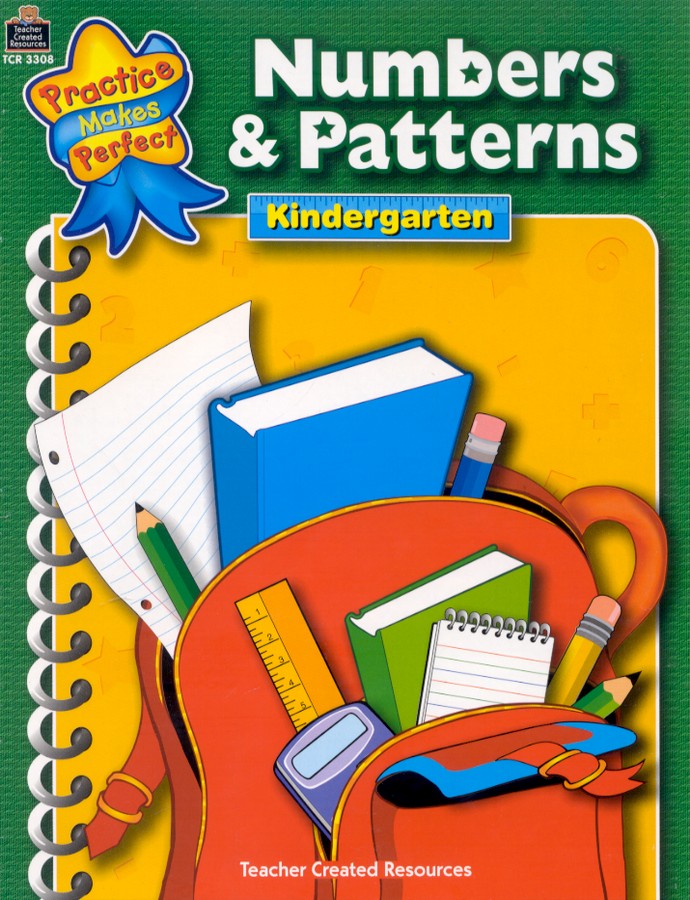
Ask lots of questions for number concepts to develop. Later, your child can practice this in Numbers and Patterns-K.

2. Sets:

Math is all about sets. Children making their own sets will provide true learning! They can enjoy sorting their toys into sets. 

Sorting buttons by shape, then by size, etc. There are sorting activities everywhere! 

My daughter enjoyed sorting laundry into sets by grouping the like sized towels/washcloths, etc. 

Buttons can be sorted by size, color, or shape into sets, etc.

3. Addition and Subtraction: 

Cookies are the best for this! Or give your child a cookie sheet to work on with a limited number of toys. Ask your child to add the trucks to the cars or other simple problems.

4. Mathematical Patterns: 

As you know, math is made up of patterns. Crayons can be used to sort into patterns, such a finding all the orange and blue crayons and lining them up for a two part pattern (e.g., orange/blue, orange/blue,etc.) Making a bead necklace is fun too. Use a two part pattern, or a three part pattern.

As your young child gets better, add in a fourth part (e.g., one more color, blue/red/yellow/purple, repeat, etc.) Coloring patterns can be fun too. There are some patterns to color in Numbers and Patterns –K.

5. Equivalents: 

Making equivalents is fun! 

Rods can be used for this but you can make your own out of construction paper. 

First, cut out a strip of paper that is 10 inches long, say in blue. 

Then cut out cubes that are 1 inch in size, in yellow. 

Ask your child how many yellows equals a blue? He/she will find that 10 yellow cubes equals one blue (10 inch strip). 

And they will be doing equivalents!!

Your child can discover these herself! Everything that your child discovers for herself will stick and prepare her for more advanced math later!

I have more about manipulatives kits here.  You can teach all of the early math concepts through manipulative play!  Here's more on that..


Early Math Resources


Numbers & Patterns, Grade K
When we needed more ideas for our math play, we turned to some workbooks by Evan-Moor or Teacher Created Materials

Both are frugal and done by well respected publishers.  Here are some of our favorites:

Numbers and Patterns - Kindergarten 

Lots of great ideas for math play here.  Click the title to read my review of this resource.

Shapes and Beginning Fractions 

This little resource gave us more ideas for our math play.  We usually used our manipulatives along with the book, so that my daughter could do the early math problems hands-on. 

We would take one page at a time, encouraging my daughter to solve the problems by using her manipulatives.  

Handling the manipulatives and working out the early math problems in the book, really makes early math come alive!  One evening we even made pizza night into a lesson on fractions.

Who gets to eat the last piece, 1/4th?

Evan-Moor Educational Publishers has lots more preschool, kindergarten  and early elementary workbooks here

Has your little one begun to explore early math yet? 

Whatever way that you decide to introduce math to your little ones, enjoy it.  I sure did.  

For more encouragement for homeschooling your young ones, click here - 6 Tips to Homeschool your Preschool or Kindergarten Childfrom my friend, Terrie.


Thanks for stopping by BJ's Homeschool,

Betsy


Betsy is a former O.T, preschool teacher, homeschooling mom and published author of children's stories.  She blogs at BJ's Homeschool about the early yearshigh schoolcollegeand is the author of "Homeschooling High School with College in Mind".  She offers free homeschool help through messages at BJ's Consulting.


Want to stay in touch?


Copyright, 2025 All Rights Reserved